


By Tripti Vashisth and Megan Dewdney
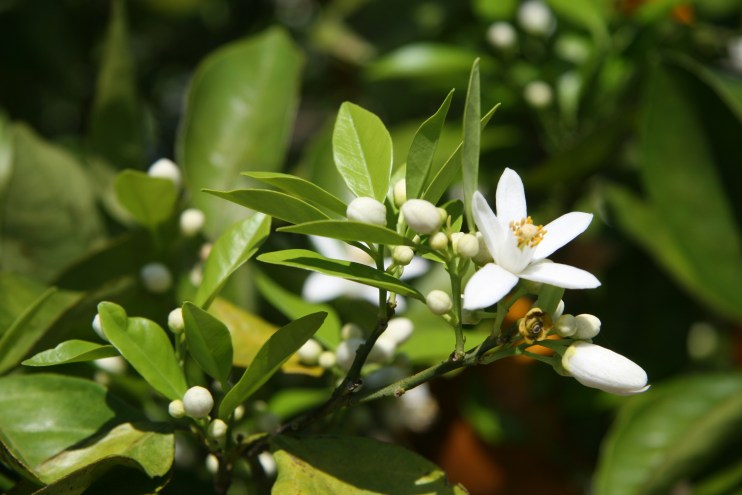
Current El Niño conditions may increase the risk of prolonged and off-season flowering in Florida citrus. Current forecasts indicate above-average rainfall with near-average temperatures. However, when and how long these conditions will persist remains unpredictable. Several dry days followed by a downpour can further stress citrus trees. Such conditions can result in prolonged off-season flowering along with a moderate bloom. A strong, synchronous bloom is not expected this year in Florida.
Prolonged flowering not only presents horticultural management challenges but can also result in a weaker crop load, as early-set fruit are more likely to drop. In addition, postbloom fruit drop (PFD) remains a concern. If flowering coincides with warm, wet conditions, PFD pressure can increase significantly. Prolonged flowering also increases the opportunity for fungal infection, leading to disease. Therefore, any practice that helps synchronize and shorten the bloom period is likely beneficial.
Gibberellic acid (GA) applied at the right time can suppress off-season flowering, synchronize bloom and reduce overall flower numbers. Research has shown that reducing flowering does not necessarily reduce yield because the proportion of flowers that set fruit often increases. In citrus, flowering and fruit set are inversely related. Reducing excessive flowering can improve the source-to-sink balance within the tree. Gibberellic acid encourages buds to remain vegetative and suppresses their development into reproductive buds.
The timing of GA depends on variety and location. In general, one application during the last week of November or the first two weeks of December can interrupt flower bud induction and suppress flowering. However, once flower bud induction reaches the “moderate high” stage, the effectiveness of GA in suppressing flowering reduces.
Grove managers are encouraged to monitor flower bud induction hours and flower bud advisories. The first advisory for this season was scheduled to be released on Nov. 23 and will continue on a biweekly basis.
GA can be applied at 20 grams of active ingredient per acre with an adjuvant. Follow the label.
Tripti Vashisth and Megan Dewdney are professors at the UF/IFAS Citrus Research and Education Center in Lake Alfred.
Share this Post