
LDC photo
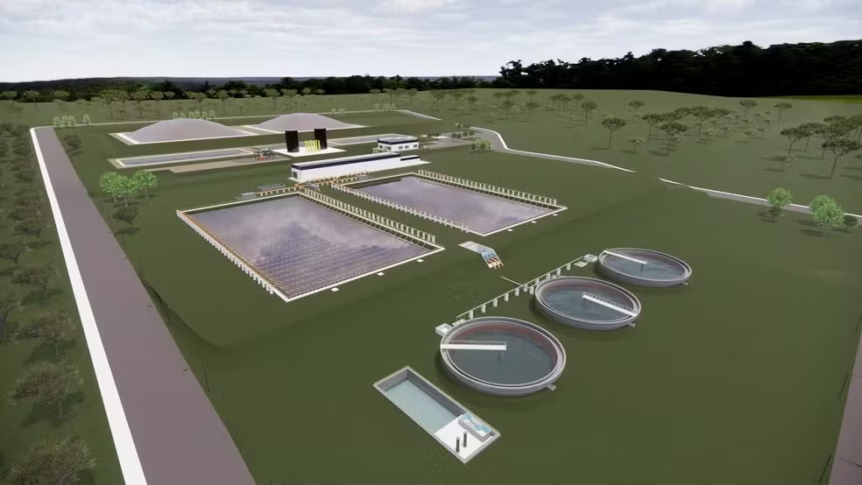
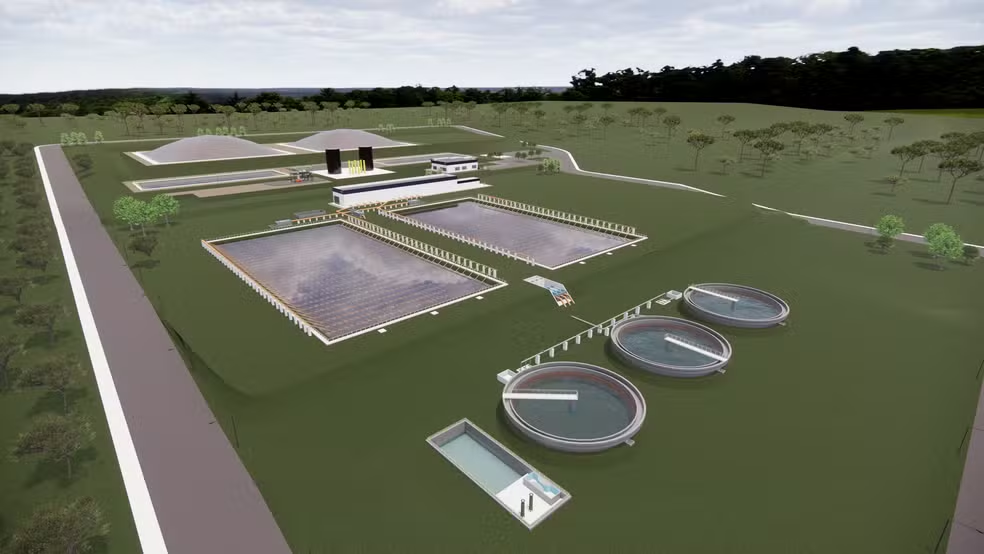
In São Paulo, Brazil, Louis Dreyfus Company (LDC) is constructing what it describes as the world’s largest industrial facility dedicated to generating biogas from citrus effluent. The project, covering more than 2 million square feet, tackles one of the orange juice processing industry’s most significant waste streams by converting organic wastewater into a source of clean, renewable energy.
The facility is being engineered to handle an enormous volume of industrial waste, processing roughly 100,000 gallons of citrus effluent every hour. Utilizing specialized biotechnology and advanced inoculums, the system is designed to effectively break down the high organic load within the wastewater. At peak operations, this biological breakdown is projected to generate more than 1.77 million cubic feet of biogas daily.
Instead of relying on traditional fossil fuels, LDC will pipe this self-generated green gas directly into its own industrial operations. That transition is expected to slash the plant’s overall carbon dioxide emissions by more than 20%.
Beyond the clear energy benefits, the project emphasizes total resource recovery. A core pillar of the environmental strategy ensures that 100% of the treated water will be safely returned to local natural water resources once the organic components are stripped away.
With construction of the facility nearing completion, the infrastructure represents a highly functional circular economy model. LDC’s vast footprint in the region — which encompasses three separate processing facilities and more than 30,000 hectares of citrus groves — stands to benefit immensely from this localized loop.
By combining waste mitigation with clean energy generation, the facility may serve as an actionable framework for other food and beverage sectors striving to turn a costly environmental burden into a valuable industrial asset.
Read the full report in The Times of India.
Share this Post